2026 Top Anti Slip Surface Types for Loading Gear?

Time:2026-09-23 Author:Henry
0%

Choosing the right surface can prevent a small loading error from becoming a serious workplace incident. In 2026, anti-slip options include serrated grating, abrasive coatings, bonded grit plates, rubber mats, and molded polymer panels. Each performs differently around moisture, oil, ice, dust, and repeated impact.

The practical question is simple: How to choose anti-slip surface for loading and lifting equipment? The answer begins with the working environment, not the product brochure. A loading ramp exposed to rain needs open drainage and strong grip. A forklift platform may need a low-profile surface that resists tire damage. A lifting table requires secure bonding, stable edges, and predictable traction under changing loads.

Safety researcher James Reason wrote, “We cannot change the human condition, but we can change the conditions under which humans work.” That principle remains valuable here. Surface texture should support safe movement when gloves are wet, boots are muddy, or visibility is poor. It should also remain inspectable after months of abrasion.

Do not choose by friction claims alone. Test real contaminants.

A surface can feel aggressive but fail under oil. Another may grip well yet trap water beneath its edges. Maintenance access matters too. Replaceability, cleaning time, corrosion resistance, and worker comfort deserve equal attention. We may still overlook something. Field conditions are rarely perfect. The strongest selection process combines manufacturer data, site trials, operator feedback, and documented inspections. This guide compares the leading 2026 surface types and explains where each option fits best.
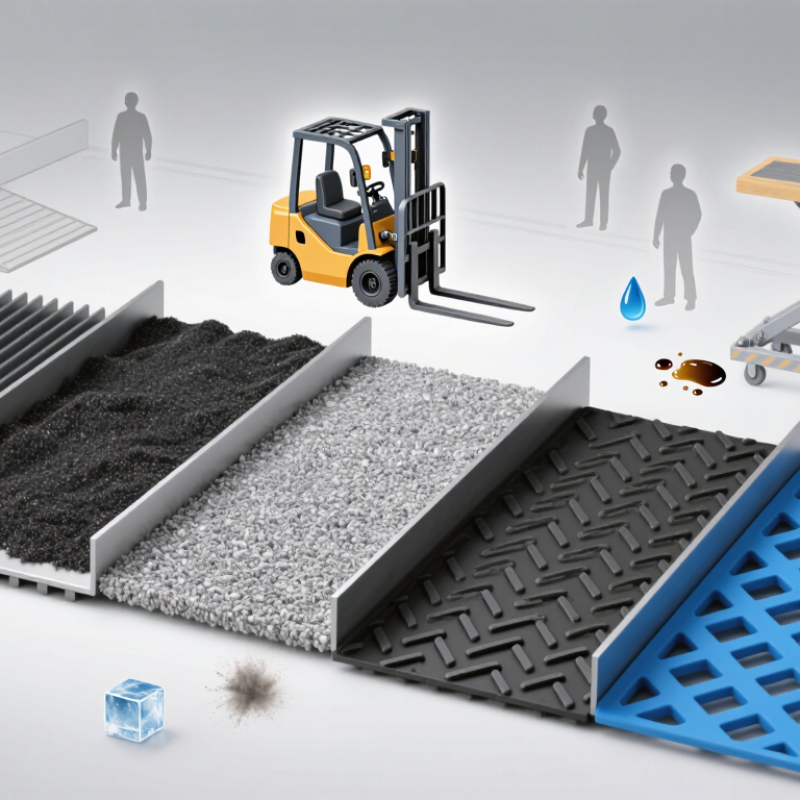
2026 Top Anti Slip Surface Types for Loading Gear?

What Makes an Anti-Slip Surface Effective for Loading Gear?

What makes an anti-slip surface effective for loading gear? It must maintain traction when conditions change. Dry metal can feel secure, yet rain, dust, grease, and frost quickly alter performance. A useful surface combines controlled texture with dependable friction, rather than relying on deep grooves alone. The texture should support boots, wheels, and equipment without creating sharp catching points.

Drainage also matters. Water trapped beneath a trolley wheel can reduce contact within seconds. Raised patterns, open grating, or carefully spaced channels can move moisture away. However, extremely aggressive patterns may increase vibration and make fragile loads unstable. That trade-off deserves attention. Load weight, wheel material, ramp angle, and movement speed should guide the surface choice.

I have found that surface testing must reflect real loading work. Test panels under dry and wet conditions, then inspect traction after repeated traffic. A clean surface may perform well in a report but poorly beside a busy dock. No surface stays perfect. Regular cleaning, visual checks, and prompt repairs protect its original grip. Engineers should record test results, load limits, and maintenance intervals. Even then, judgment remains necessary. A small worn patch near an edge can create more danger than a visibly rough surface. Effective anti-slip design is measurable, but daily experience often reveals what laboratory conditions miss.

Rubberized Coatings for Secure Loading Equipment

2026 Top Anti Slip Surface Types for Loading Gear?

Rubberized coatings remain a practical choice for secure loading equipment. They create a flexible, textured surface over steel ramps, dock plates, and vehicle floors. Unlike bare metal, rubber helps reduce sliding when moisture, dust, or light oil affects contact. A coarse aggregate can improve grip, but excessive roughness may damage wheels and straps.

In field use, I have seen a properly cured coating stay stable under repeated pallet traffic. It also reduced sharp impact noise during loading. Application quality matters greatly. The surface must be clean, dry, and free from loose rust. Edges need careful sealing, because water can enter beneath the coating. Cure time should follow the technical data, even when production teams feel pressure to reopen the area.

Rubberized coatings are not a magic layer. It feels secure. However, worn patches can become unexpectedly slippery. Inspect high-contact zones near forklift turns, ramp hinges, and loading edges. Replace damaged sections before the texture disappears. Coating thickness should match the equipment’s movement and load frequency. A softer finish may absorb vibration, while a harder blend can resist abrasion better. Testing the surface with typical wheels and cartons is more reliable than judging it by touch. I would also review drainage and lighting, because a strong coating cannot correct poor visibility or standing water.

Textured Metal Surfaces for Heavy-Duty Loading Tasks

2026 Top Anti Slip Surface Types for Loading Gear?

Textured metal surfaces remain a practical choice for heavy-duty loading tasks. Serrated grating, perforated plate, and raised-pattern steel can improve traction under boots, wheels, and equipment. Their grooves also help channel rain, oil, and loose debris away from contact points. This matters because the UK Health and Safety Executive reported that slips, trips, and falls on the same level caused 29% of specified workplace injuries in 2023/24. A dry-looking deck can still be dangerous.

Serrated grating suits platforms and ramps that need fast drainage. Perforated plate offers a more continuous surface for carts and smaller loading gear. Expanded metal is lighter, but its openings may catch narrow wheels. Selection should consider load rating, panel thickness, corrosion exposure, cleaning access, and footwear. ISO 14122-3 provides useful guidance for permanent access systems, although loading equipment may require additional engineering review. No surface is permanently slip-proof. That point is often missed.

Tips: Test the texture with the actual boots and wheels used onsite. Check traction after water, hydraulic fluid, and dust exposure. Inspect welds and raised edges monthly. Replace damaged panels promptly. A very aggressive pattern may improve grip, but it can slow carts and increase fatigue. The “best” texture is sometimes a compromise, and that deserves honest review.

Traction Mats and Modular Grip Panels for Flexible Use

Loading gear moves safely only when contact surfaces match real site conditions. In 2026, traction mats and modular grip panels offer flexible answers for changing work areas. Traction mats create stable paths across ramps, thresholds, and temporary loading zones. Their textured faces help reduce sliding when footwear or wheels meet dust and light moisture. Good mats also need enough thickness to resist curling under repeated traffic. Too thin, and the edge becomes a trip hazard.

Modular grip panels work differently. Operators can connect smaller sections around dock plates, work platforms, and irregular floor plans. Damaged pieces can be replaced without removing the entire surface. This saves handling time, but connectors deserve careful attention. Loose joints may collect grit or shift under concentrated wheel loads. Select panels rated for the equipment, load, temperature, and expected chemical exposure. Verify those details with supplier test data, not appearance alone. A clean, dry fit test should come before full installation.

From field use, the best layout leaves no sudden height changes. Mark edges where visibility is poor. Inspect after rain, forklift traffic, and cold-weather storage. A mat that grips boots may not grip hard casters equally well. That distinction is easy to miss. I would also question universal claims about all-weather traction. Performance changes with oil, ice, mud, and worn textures. Record cleaning intervals and replace sections when cuts expose the base layer. Flexible systems are practical, yet they still need disciplined inspection and honest site-specific judgment.

2026 Top Anti-Slip Surface Types for Loading Gear: Traction Mats and Modular Grip Panels for Flexible Use
Surface Type Typical Construction Best Loading-Gear Applications Typical Thickness Grip Mechanism Wet-Use Capability Flexibility and Installation Cleaning and Drainage Main Advantages Key Limitations
Heavy-Duty Rubber Traction Mats Recycled or virgin rubber with molded ribs, studs, or diamond patterns Loading ramps, dock approaches, pallet-jack routes, trolley lanes, and temporary work platforms 10–25 mm High-friction elastomer surface combined with raised tread geometry Very good Highly flexible; loose-laid, beveled-edge, or mechanically secured installation Open-hole and ribbed designs allow water and debris to pass through; pressure washing is generally suitable Good shock absorption, strong noise reduction, quick deployment, and effective compensation for minor floor irregularities Heavy to handle; may retain odor or oil if the rubber compound is not selected for the environment
PVC or TPE Modular Grip Panels Interlocking thermoplastic panels with textured or perforated top surfaces Temporary loading zones, warehouse aisles, service platforms, and changing work areas 12–30 mm Embossed texture, molded tread, and panel joints that distribute contact pressure Good Highly modular; panels can be connected, removed, and reconfigured without permanent construction Perforations improve drainage; individual panels can be lifted for cleaning Lightweight compared with rubber, easy to expand, and suitable for fast layout changes Panel joints require a level base; some formulations can soften or deform under high heat or aggressive chemicals
Reinforced Composite Modular Panels Fiber-reinforced thermoplastic or composite core with a molded anti-slip top layer Portable ramps, loading bridges, equipment staging areas, and repeated setup applications 15–35 mm Hard-wearing molded pattern with distributed load support from the reinforced core Good to very good Modular and reusable; usually requires positive joining or edge restraint in high-traffic areas Textured channels can direct water away; clean with neutral detergents unless the supplier specifies otherwise Good strength-to-weight ratio, dimensional stability, and resistance to repeated handling More expensive than basic mats; unsupported spans must be checked against the panel’s rated load
Perforated Steel Grip Panels Galvanized or coated steel panels formed with raised perforations, serrations, or punched openings Fixed loading platforms, ramps, stairs, dock edges, and areas exposed to heavy rolling equipment 3–8 mm sheet thickness, excluding structural supports Raised metal edges create multi-directional mechanical traction Excellent Rigid rather than flexible; normally bolted or welded to a supporting frame Excellent self-draining performance; open profiles reduce standing water and loose debris High durability, strong load capacity when properly supported, and good resistance to impact Can be noisy, may corrode if coating is damaged, and can create a trip hazard if edges are not finished properly
Aluminum Modular Grip Panels Lightweight aluminum sections with serrated, punched, or abrasive-coated walking and loading surfaces Portable loading ramps, vehicle access platforms, aircraft-service equipment, and mobile staging systems 3–10 mm panel thickness, excluding frames and reinforcement Serrated metal profile or bonded abrasive aggregate Very good Rigid but comparatively lightweight; commonly hinged, bolted, or fitted into modular frames Open serrations provide rapid drainage; avoid cleaners that attack aluminum or bonded coatings Low handling weight, corrosion resistance in many environments, and easy integration into portable systems Metal surfaces can become slippery when contaminated with oil or grease; unsupported loading limits must be verified
Rubber-Backed Anti-Slip Decking Rolls Flexible rubber or polymer backing with bonded mineral grit or molded abrasive texture Walk-behind loading equipment, narrow ramps, steps, thresholds, and irregular transition areas 2–6 mm High-friction abrasive particles or engineered textured topcoat Moderate to good Very flexible; adhesive, mechanical fasteners, or edge trims are used to prevent curling Usually non-perforated, so drainage is limited unless installed on a sloped or covered surface Easy to cut, economical for small areas, and effective on uneven or curved substrates Less suitable for concentrated wheel loads, standing water, deep contamination, and frequent repositioning

Selection note: Actual slip resistance, load capacity, service life, and chemical compatibility depend on the surface profile, contamination, temperature, substrate support, fastening method, and traffic type. Confirm performance using the manufacturer’s tested data and the applicable local safety requirements before installation.

How to Select the Right Anti-Slip Surface Type in 2026

Choosing the right anti-slip surface for loading gear starts with the working environment, not the product label. Check whether ramps, dock plates, or platforms face rain, oil, dust, or frozen residue. Wet areas usually need deep grooves, raised patterns, or perforated metal for drainage. Smooth grit can lose performance when mud fills its texture.

Match the surface to the load and traffic. Heavy carts and forklifts may damage thin grip tape, especially at turning points. Abrasive coatings suit fixed steel platforms and moderate traffic. Molded rubber can reduce vibration and improve foot comfort on steps. Perforated steel handles repeated loading well, but small openings may trap debris or catch narrow wheels. Measure wheel width carefully.

Maintenance is easy to underestimate. Inspect high-contact zones after installation, then check them monthly during busy seasons. Look for polished spots, loose edges, clogged openings, and peeling areas. A surface that feels rough when dry may become slippery under hydraulic fluid. That detail is often missed. Cleaning methods matter too; aggressive tools can wear down the texture, while weak cleaning leaves a greasy film. Temperature, footwear, drainage, and replacement access should influence the final choice. No surface is perfect. In practice, a slightly less aggressive texture may work better if workers can clean and inspect it consistently. The safest selection is the one that keeps traction predictable under real loading conditions.

2026 Top Anti-Slip Surface Types for Loading Gear

Typical dry static coefficient of friction benchmarks indicate how strongly common loading surfaces resist sliding. Higher values generally provide better traction, but wet conditions, contamination, wear, footwear, and load pressure can significantly change performance.

Values shown are representative midpoints from commonly reported dry static-friction ranges for comparable surface materials, not certified product ratings. For final selection, verify performance under the expected wet, oily, dusty, temperature, and load conditions.

FAQS

Which metal surface works best for wet loading ramps?

Serrated grating allows rain, oil, and loose debris to pass through. It suits ramps and platforms. However, deep grooves may slow small carts.

Is perforated metal suitable for carts and loading equipment?

Yes, perforated metal provides a more continuous rolling surface. It handles repeated loading well. Check the openings against wheel width before installation.

Can expanded metal support narrow wheels safely?

Expanded metal is lighter and useful in some platforms. Its openings may catch narrow wheels or small casters. That risk is easy to underestimate.

Are traction mats suitable for temporary loading areas?

Traction mats create stable paths across thresholds, ramps, and temporary zones. Choose enough thickness to prevent curling. Thin edges can become trip hazards.

What should workers check before installing modular grip panels?

Check the load rating, temperature range, chemical exposure, and connector strength. Perform a clean, dry fit test. Loose joints may shift under concentrated wheel loads.

How should an anti-slip surface be tested?

Test it with the actual boots, wheels, and carts used onsite. Add water, dust, and hydraulic fluid during checks. Dry traction alone is not enough.

How often should loading surfaces be inspected?

Inspect welds, edges, clogged openings, and polished spots monthly. Check again after heavy rain or forklift traffic. Replace damaged panels promptly.

Can the roughest texture provide the safest result?

Not always. Aggressive patterns may improve grip but increase cart resistance and worker fatigue. A slightly milder surface may perform better when cleaning stays consistent.

Conclusion

Choosing the right anti-slip surface is essential for keeping loading and lifting equipment stable, controlled, and safe during demanding operations. An effective surface should provide consistent traction in wet, oily, dusty, or high-traffic conditions while resisting wear, impact, and changes in temperature. Rubberized coatings can create a resilient, cushioned grip for ramps, platforms, and handling areas, while textured metal surfaces offer strong durability for heavy loads, frequent movement, and industrial environments.

For flexible layouts, traction mats and modular grip panels are practical options because they can be repositioned, replaced, or expanded as operational needs change. When considering how to choose anti-slip surface for loading and lifting equipment, evaluate load weight, surface exposure, cleaning requirements, installation method, maintenance demands, and expected service life. The best solution balances traction, durability, comfort, drainage, and compatibility with the equipment, helping create a more dependable loading area in 2026.

Henry

Henry

Henry is a dedicated marketing professional with a profound expertise in the company's offerings. With years of experience in the industry, he possesses an impressive understanding of the market dynamics and consumer behaviors that drive success. Henry is committed to sharing his insights through......